Showing posts with label fiction. Show all posts

Wednesday, May 13, 2026

My presentation of THE BOY WITH THE STAR TATTOO


I am breaking tradition when I post publicly an excerpt of my book presentation of 

THE BOY WITH THE STAR TATTOO.

Here it is, my presentation at the Hamptons Synagogue, which was recorded and appeared recently in the JBC's program: https://jbstv.org/archives/40383 


Two years of book touring for THE BOY WITH THE STAR TATTOO have been incredibly gratifying—and perhaps record-breaking: 150 in-person events, mostly to audiences of 75 to 300 attendees, with some as large as 500—and even 700, as at the BNC in Phoenix, AZ. We lost count of the numerous Zoom presentations, which were an honor to deliver, allowing me to visit and connect with communities I could not reach in person. I am forever grateful to book clubs, whose members continue to select this novel for lively discussions—and then spread the word to others. Each reader is a blessing.

A significant boost against the tide of anti-Semitic campaigns came with the honor bestowed upon the novel by the Jewish Book Council, which awarded it the seal of Finalist (#2) in the Book Club category.

The year 2025 was the most difficult of my life. It began with the precipitous decline of my husband Ron’s health, followed by his shocking passing on June 3. My readers, event coordinators, and book reviewers who praised my latest work helped sustain me through the many difficult months that followed. You all reminded me that beneath the grief, there was still an independent person—a novelist with a creative mind.

I am remiss in not sending out an updated newsletter, Talia Tells Tales, while I now spend my spring of 2026 in Paris. This city, which has inspired so many renowned authors, is now the place where I am returning to writing my seventh novel. I began it in 2024, even travelled to a remote corner of Europe for research. I had written over 100 pages when I put the manuscript aside to focus on caregiving and book touring. When I reopened it on my PC for the first time in 16 months and read it with fresh eyes, I was delighted by how compelling the story remained—and, I must say, how well-written those pages were. Had it really been me who wrote them?

There is a reason I do not discuss the theme and contents of a novel until the manuscript is complete and revised a few times: I cannot commit to the story until it finds its rhythm. Characters take unexpected turns, new moral dilemmas arise, and the storyline often shifts.

Stay tuned! In the meantime, there are six novels of mine for you to explore. Please visit my website, www.TaliaCarner.com to check them out and read the first few chapters of each. I promise you’ll find your next compelling read!


Sunday, September 15, 2019

THE THIRD DAUGHTER broke out of the gate!!!


It's my new baby!!!

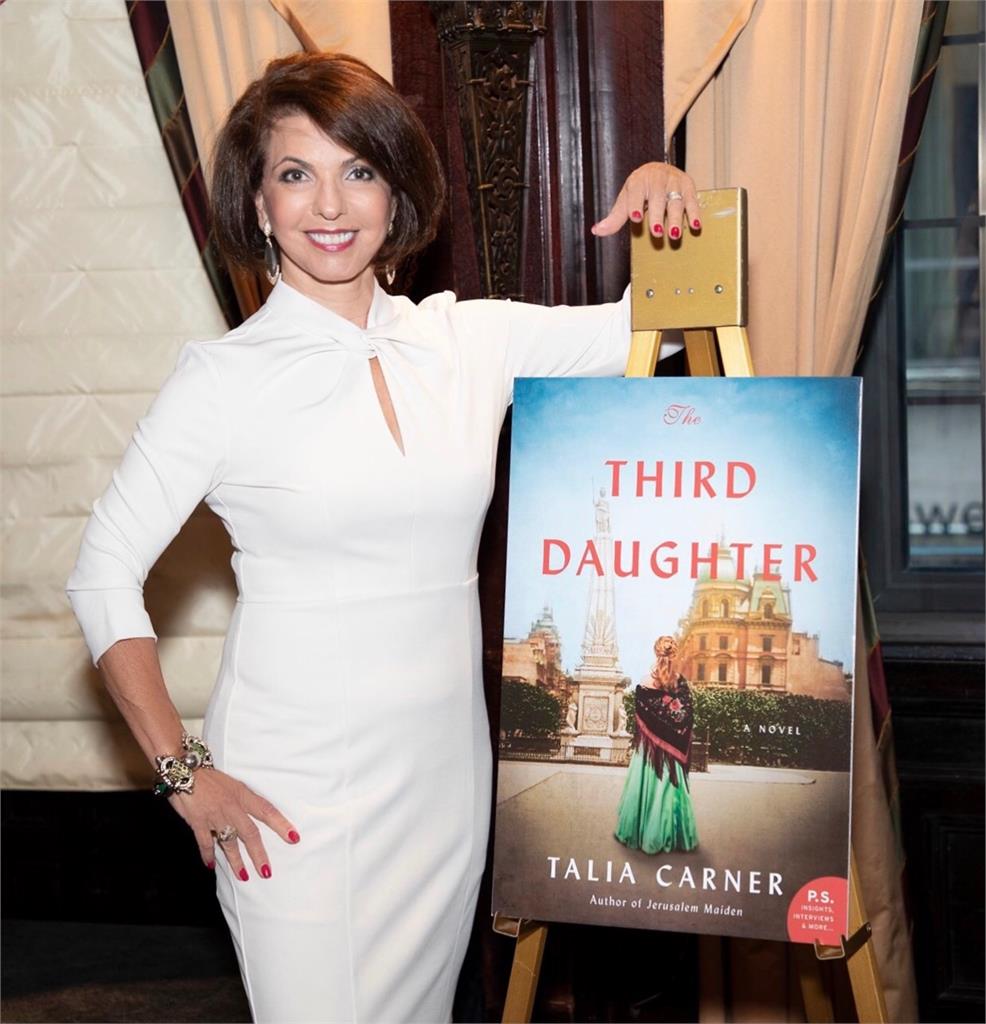
On September 3rd, HarperCollins released the novel and joined me in hosting an exciting party at the NYC Friars Club. In attendance were my publishing team, journalists, celebrities, authors--and representatives of anti-sex-trafficking organizations.


A fascinating story never before told!
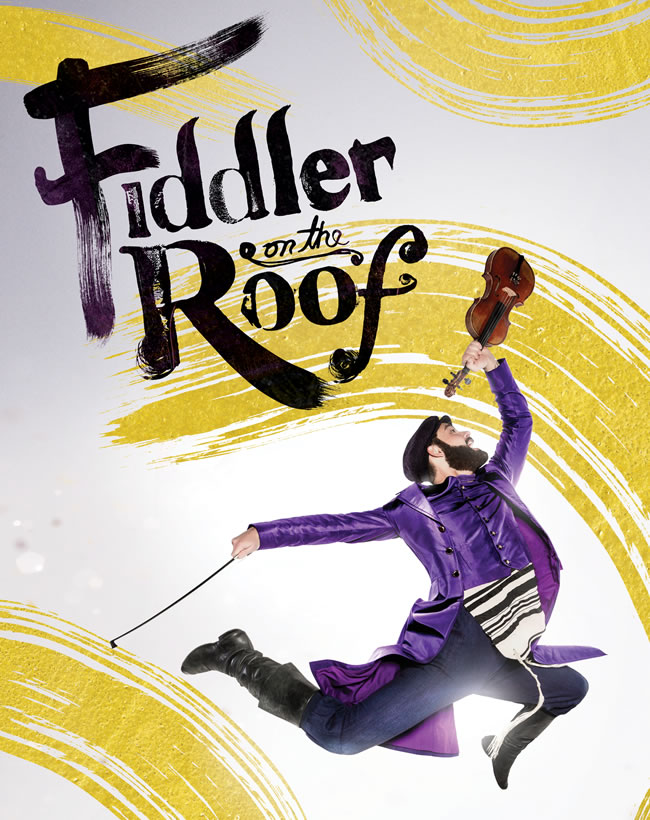
THE THIRD DAUGHTER was inspired by Sholem Aleichem's short story, The Man from Buenos Aires, that appeared in the same collection as Tevye the Dairyman. I invented the story of one of Tevye's daughters as the family flees a pogrom (--a sequel to Fiddler on the Roof.) They meet this mysterious, shady man, who lures the daughter from Russia to Argentina with a false promise of marriage-- only to force her into a brothel.  

Zwi Migdal was a legal union of traffickers headquartered in Buenos Aires, that operated with impunity for 70 years. THE THIRD DAUGHTER is a tribute to the estimated 150,000 to 200,000 Jewish girls and women whose haunting voices impelled me to tell their truth....

But as one reviewer writes, the novel has "a satisfying, redemptive ending!"

Bloggers are raving about the novel:
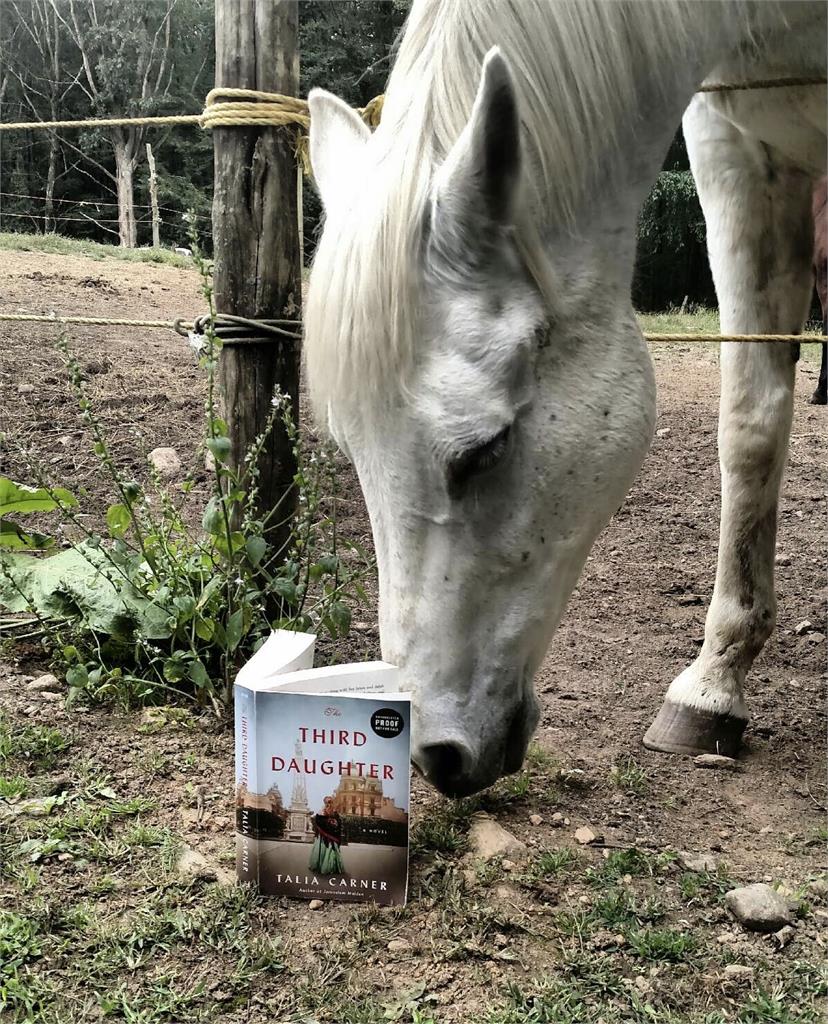
Bloggers who received an Advanced Reader Copy (ARC) of THE THIRD DAUGHTER have posted enthusiastic reviews and recommended the novel to their followers. 

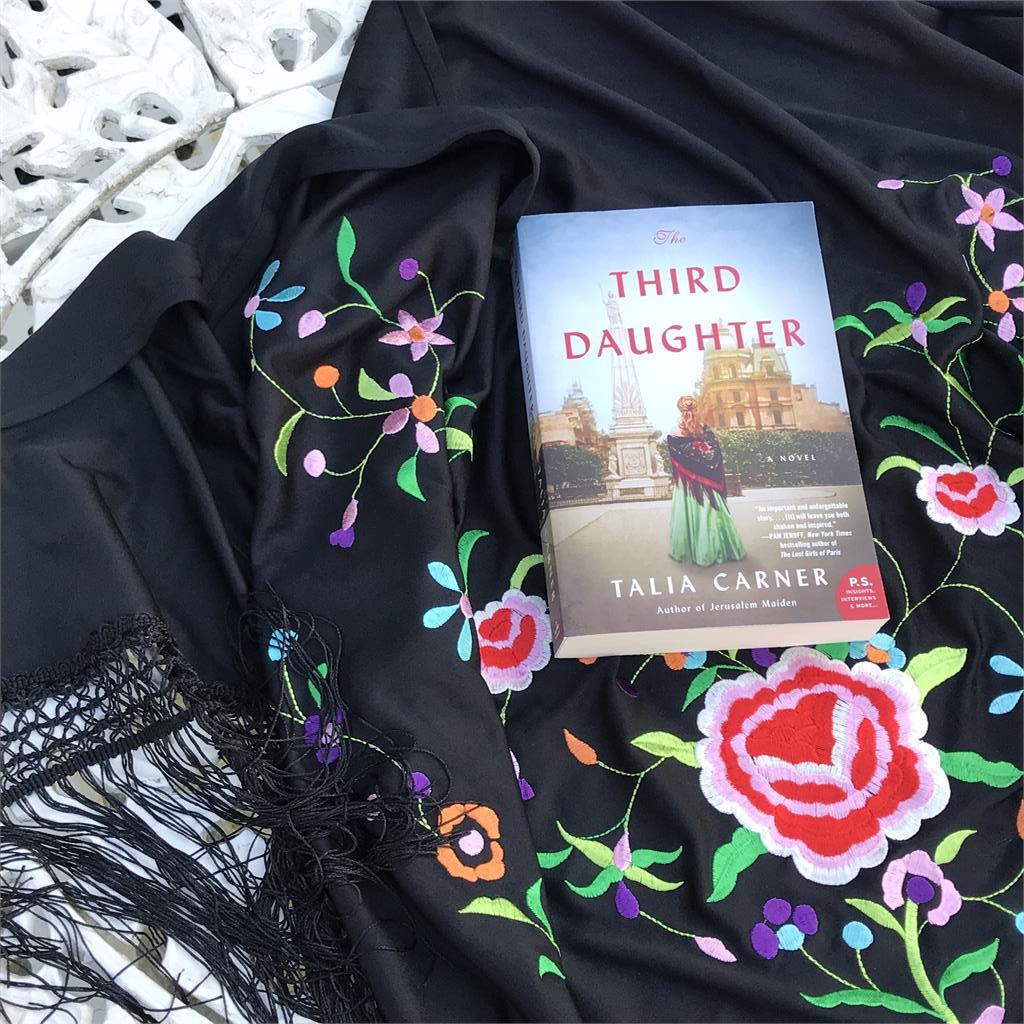
They also take creative photos of the book! Here are some quotes:

"...this novel had me hooked until the very last page...! Carner’s storytelling ability was fantastic and you will feel like you are right in the middle of Buenos Aires...."
--Girly Book Club


"This novel is as gripping as her previous books…. I found myself wanting to know what would happen next. The book was well written and the main character was easy to admire…"
--Doing Dewey Decimal


"Carner has done wonderful research to bring us this important and unforgettable story of exploitation and empowerment….She is an excellent story-teller who brings history and imagination together to fictionalize the true history of young Jewish girls who were forced into prostitution in Buenos Aires."
--Amos Lassen


"...it was moving without being too sentimental or emotional…. Carner captured the atmosphere of Buenos Aires and Batya’s despair and fortitude...."
--Julz Reads


"Talia Carner has written a raw, heartbreaking, disturbing, and important story….it is engaging and entertaining …. Batya was such a sympathetic character..."
--Audio Killed The Bookmark


Please click for more reviews.


Book clubs' promotion
A good book club selection is one that is more than well-written. It must provoke thinking and be a superb conversation starter. The social issue of sex-trafficking and the historical secret revealed in THE THIRD DAUGHTER are guaranteed to generate a lively discussion.

In the coming months, any group that sends a photo of members holding their copies of the novel (or showing the digital covers) will participate in a monthly drawing of a replica of the Spanish embroidered shawl worn by the model on the cover of the book, an outfit that followed the description of Batya's clothes. 

(The group that wins the magnificent shawl may pre-decide who will be its final owner--the hostess? A birthday girl? One who reached a fund-raising goal?)

Of course, I will be delighted to Skype or phone into the meeting. Please write to me at AuthorTalia@aol.com to schedule--and/or to send your photo.
  
My anti sex-trafficking campaign.
While THE THIRD DAUGHTER takes place in the late 1800s, the methods used by traffickers today are, sadly, the same. Human misery increases the supply of desperate girls and women (and some boys) eager to believe the promise of "America." But 1/3 of traffic victims are USA-born, with recruitment age being 12-14 years old!

I've teamed up with about 20 anti-sex-trafficking organizations that deal with the many aspects of sex-trafficking. A page on my website explains the problem in detail and offers links to activism. YOU CAN DO SOMETHING to fight it in your own backyard!

Event organizers who invite me to keynote may ask me to use the stage to educate their audience about the roles of airlines, schools, businesses, hotels, sports arenas, prisons and banks in sex trafficking—and in the efforts to abolish it. (Or, they may choose other aspects of the novel as described below.)

What if the subject is just too much for our audience?
Another fascinating backstory of THE THIRD DAUGHTER is the little-known history of Argentine Jewry. How did Argentina become the third largest Jewish community in the world? 

It is due to the vision and unprecedented benevolence of one man, Baron Maurice de Hirsch, who, in the 1880s, bought the freedom of hundreds of thousands of Jews from the Czar. He bought huge tracts of land in Argentina, established agricultural colonies, and shipped the beleaguered Jews to their new home. 

And then there is the larger topic of the creative process: Readers often ask me how do stories find me? And what do I do once they implant their seeds in my brain? The answer: I take a skeleton out of the closet and dance with it. The skeleton being the many social issues around the globe that vie for attention.

Please discuss the topics with my Events Coordinator, Lisa Bernard, at MecoxHudson@gmail.com or (203)919-8406

Don't miss my upcoming appearances:
Here are the events in Fall 2019 in NY, NJ,and PA. Please check my Book Tour page for winter 2020 in Florida, and spring 2020 in Metro New York and Maryland/ Washington DC (--and keep checking periodically for additional events.)

Tuesday, September 17, 2019, 11:30 AM
Book & Author Luncheon
Women’s Club of Glen Cove
Sea Cliff Yacht Club
42 The Blvd, Sea Cliff, NY 11579
BY INVITATION ONLY

Wednesday, October 2, 2019, 7:00 PM
Hadassah-Brandeis Institute
Brandeis University
Women’s Studies Research Center, Epstein Building
515 South Street,
Waltham, MA
OPEN TO THE PUBLIC (RSVP: NLeonard@brandeis.edu (781)736-8110)

Thursday, October 3, 2019, 10:00 AM
20th Anniversary Celebration
The Miriam Fund
Combined Jewish Philanthropy of Greater Boston
Hebrew College
160 Herrick Road,
Newton Centre, MA
BY INVITATION ONLY

Wednesday, October 16, 2019, 11:30 AM
Annual Fundraising Literary Luncheon
Brandeis National Committee
Greater Hartford
Golf Club of Avon
160 Country Club Rd, Avon, CT 06001
OPEN TO PUBLIC (Pre-registration required)

Wednesday, October 16, 2019, 7:00 PM
“Meet The Author”
Mark Twain Library
Redding, CT
PUBLIC INVITED!

Thursday, October 24, 2019, 7:00 PM
Book Club discussion
BookMark Shoppe
8415 3rd Ave
Brooklyn, NY 11209

Thursday, November 7, 2019 1:00 PMLiterary Tea in honor of Jewish Book Month
Main Line Reform Temple/ Beth Elohim
410 Montgomery Ave, Wynnewood, PA 19096
OPEN TO THE PUBLIC

Wednesday, November 13, 2019, at 7:00 PM
Stamford Hadassah & Beth-El Sisterhood
Temple Beth El,
350 Roxbury Road,
N. Stamford, CT

Sunday, November 17, 2019, 11:30 AMBook & Author Luncheon
Nathan Cember Memorial Lecture Series
Congregation Sons of Israel (CSI)
Nyack, NY

Tuesday, November 19, 2019, 10:00AM
Book Discussion, THE THIRD DAUGHTER
Blue Door Books
501 Central Ave,
Cedarhurst, NY

Sunday, December 15, 2019, 10:00 AM
Literary event 
Merrick Jewish Center
225 Fox Blvd
Merrick, NY
OPEN TO THE PUBLIC

Wednesday, December 18, 2019, 9:30 AM
Bagel & Book
Hadassah The Cascades (and others)
Clubhouse at the Cascades
6601 Cascades Isle Blvd, Boynton Beach, FL

Don't see an event in your area? Organize one, or ask your JCC, synagogue, civic and educational organization to invite me. (JCCs and some synagogues are members of the Jewish Book Council, and can be booked through it.) And/or contact my events coordinator, Lisa Bernard at MecoxHudson@gmail.com , (203)919-8406

Ready for a literary adventure?
If you haven't yet read THE THIRD DAUGHTER, please order your copy in any format—print, digital, audio or LARGE PRINT. (All my novels are published as trade paperback to keep the price down.)
Please ask your library, too, to add it to their list.
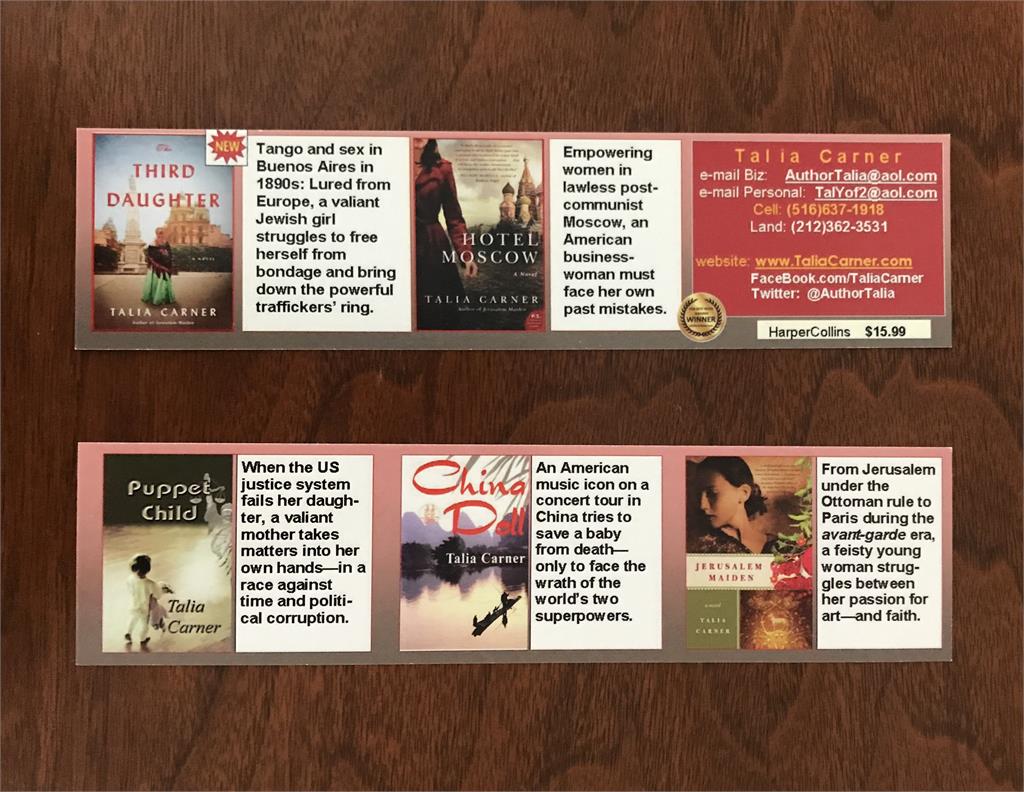
Either way, I have lots of bookmarks for you and your friends. Please write to me at AuthorTalia@aol.com.
 
Thank you for your interest and support,
Talia
www.TaliaCarner.com


 P.S. You may read the first chapter of THE THIRD DAUGHTER on my website--and of course, order at your  local indie store, on B&N,  Amazon, and iTunes.

Saturday, January 18, 2014

The Myth of Self-Publishing


More often now, I am approached by people who have just written a novel and immediately self-published it. Starting with their poorly presented request, continuing through their poorly presented material on their website or Amazon--and immediately upon reading the first page or two (sometimes the first paragraph,) the work reeks of amateur writing. I am all for trying to write, but it takes a lot more to reach the publishable stage.
 
While some books get the full professional treatment by the authors who have honed their craft and eventually hire editors to make their manuscripts as perfect as can be, I've heard would-be authors that "never want to bother" with the many rounds of revising and editing--"too much work and it's boring"--not to mention the cost of a professional editor who can shepherd a writer. (Beware of phonies, though, as the field is peppered with them.)
 
This lazy attitude is reflected in the first few page(s) of many self-published books I've been asked to read and to give my endorsement or write reviews--after publication. Unfortunately, the stigma is justified. It is simply too hard to find the gems among these many half-assed efforts in the self-publishing arena. The rare success stories give false hope to many would-be writers the same way that inner-city African-American boys dream of becoming the next Michael Jordan....  These boys stand no more chance to emulate his successful career as any writer can "pull $50,000 a month" as described in some articles or promised by self-publishing outfits. Those print-on-demand outfits make their $$s not from selling books they print, but from the hefty fees paid by authors for "marketing"--another scam since they do little more than make the books available on Amazon.
 
No star dust of success will be sprinkled from above unless you are willing to do the work.
 
Rare is the concert pianist who sits at the piano at age four, and then proceeds to compose and give performances at Carnegie Hall with little training. Most professional musicians spend a lifetime of daily practicing. Writing--especially fiction--requires mastering the craft, revising and editing numerous times--often for years. (I go over each of my manuscripts 80 times and have half-a-dozen astute readers with red pens give me their feedbacks.) It's not for nothing that many authors report 4-10 years of working on a single novel.
 
The exception to this doom-to-fail efforts are those who write personal biographies for their own family recorded history and do not expect to sell (or give away) more than 60 copies. The other exception are consultants who wish to put their wisdom into books they can use as promotions to obtain assignments, establish credibility to get on radio and TV shows, or give or sell copies at their workshops. But their books better be good! It is simply embarrassing to give out a book filled with errors.
 
I am all for the write-your-novel-in-one-month projects as they jump start many would-be authors. But that first month is only the first baby step. If you are writing your first novel, just make sure you love the long and lonely process, so that the journey will be the most exciting you've ever taken.

Thursday, December 22, 2011

The Short Story vs. A Novel

Recently, a reader asked me about “the short stories that had led to writing each of your novels.” The question presumed a set path in developing fiction, a road starting with an embryo short piece that, incubated and nurtured, develops into a book-length work. It reminded me that when someone had asked Ernest Hemingway, “How do you write a novel?” He answered, “You first clean the refrigerator.”

I was not “cleaning a refrigerator” when, on Nov. 3, 1993 at 2:48 PM, I started typing away. My fingers did not take a rest for 9 months until I had a 640-page draft.

Penning that first novel was not the result of long years of contemplation, collecting material and clearing space in the attic for a desk on which to pour out my authorly ambitions--nor of having the seed of a short story. I had never even kept a journal in which I aired my grievances against neighbors or my pet peeves against humanity…. There was no short story that needed harvesting.

Instead, that first novel--painted on a large canvas of world stage, populated with a host of characters and pretzeled with subplots--burst out of me with all its multi-layered literary nuances, psychological exploration, and social message. Only after that maiden draft was completed did I begin to hone my fiction-writing skills through writing workshops, how-to books, feedback from new writing buddies, and being mentored by successful authors.

Throughout that process I met professional writers--journalists and poets--who had been dreaming for years to “one day write a book-length work.” The more I heard those comments the more I grasped the enormity of the task I had accomplished. But I also realized that my mind was simply wired to think in terms of 120,000 word stories. If anything, my most monumental task for each novel has been to rein the story from becoming too long. With each novel I must tame the material down to a publishable size. (In the many revisions of my recent novel, JERUSALEM MAIDEN, at one time I cut 90 pages and 25 more another time—not in large chunks, but rather through brutal trimming of subplots, scenes or events.)

It was only at writing workshops, by way of exercises, that I was introduced to the short-story form and to the personal essay structure. The 800- to 3,000-words pieces I write in between novels are delightful fillers, like sorbet that clears the palette between heavy dishes. However, none so far has had the seed to grow into a full-length novel.

On the other hand, trying to find short stories hidden inside my book-length tales is equally difficult. The two forms are of different species. No matter how much you feed a Chihuahua, it will never grow into a Great Dane.

You may enjoy reading samples of my short pieces at http://www.taliacarner.com/writingsamples.html
 # # #
Novelist Talia Carner’s most recent novel, JERUSALEM MAIDEN, won the Forward National Literature Award in the “historical fiction” category.

Tuesday, May 10, 2011

Truth is a must in fiction

Real life happens, and, paradoxically, that is what fiction is about.

Back in the stone-age days of the early 80s, I worked for Redbook magazine, which taught young married women how to manage the physicality of home, family, kitchen, marriage, and children. The editorial content supposedly reflected the nuances of women’s lives and covered relationship topics such as friendships or loss of loved ones. Sometimes their articles even touched job-loss or difficult in-laws, but “problems” were usually sugar-coated and often had the unreal feel of Hallmark Cards.

In 1985 I moved to Savvy Woman magazine as its publisher. Savvy was the magazine for the women executives—a new phenomenon for those females “allowed” to play with the big boys in their sandbox.

Common to both types of magazines was the fact that none recognized the anguish of women who had failed to find a mate, or had coupled with the wrong man in a marriage that was ending in divorce. Nor was the word “custody” ever mentioned. Whether a homemaker or a CEO of a public company, there was an assumption of happiness within the context of a husband and children.

I always worked in the business side of magazines, never the editorial. But I asked questions. Redbook editors had told me that it would be “a kiss of death” for a magazine to touch the topic of divorce, let alone abuse, court, or lawyers. And in Savvy Woman magazine, we published a study proving how sexually satisfied executive women were in spite of their busy lives. Only a few of years ago, the then-Editor-in-Chief (and still my friend), Wendy Reid Crisp, described the fraudulent way in which this study had been obtained—and how she had been pressured by the magazine’s management to publish it. Executive women were shattering the glass ceiling with their heads. The truth was that they were lonely, unhappy, and had little sex.

We trusted magazines. Women’s magazines were our friends, our companions. I loved their feel, their fresh smell of ink that even perfume samples failed to ruin. It was disappointing to read the blasting indictment by Myrna Blyth, the former Editor-in-Chief of Ladies’ Home Journal for over 20 years, of women’s magazines and their exploitation of women’s insecurities and dreams….

In the 1990s, I left the business world to become a full-time fiction writer. I had always been an avid reader of novels—a slow reader, I must say, as I mouthed the music of sentences and heard in my head the rhythm of paragraphs, waiting for that wonderful concert of senses in the form of a story that grabbed me and wouldn’t let go, sometimes for year!

Novels capture you in quite the opposite way than magazines do. Rather than seeking information and “how-to” guidance, you approach a novel for the entertainment value, for the intellectual stimulation. You know it is fiction, it is not real, and you hope it would give you an emotional thrill. A good story is artistically woven with universal emotions under the pressure-cooker of seemingly real-life crises, and it carries you into this fictional world with all its trials and tribulations. Suddenly you care. At the end, you are inspired and encouraged, because when you embark upon a journey with the protagonist, you ride along the twists-and-turns in a condensed real-life manner, and you discover or redefine truths along with her.

Truth is a must in fiction. Only the characters and personal events relating to the protagonist are fictionalized. The emotions must be real. The way information is being doled out must be sincere.

And if divorce or death, or betrayal, or misery, or custody battle, or social injustice happen in fiction, it is because real life is filled with roads of no returns. As Nola, the protagonist of one of my novels, CHINA DOLL, discovered: the most common denominator of people are the emotions of separations and losses.

And that emotional truth is the basis of a good novel.
# # #

Author Talia Carner's new novel is JERUSALEM MAIDEN (HarperCollins, June 2011.) It depicts the struggle of a young woman between her passion for art and her society's religious dictates. Please check www.TaliaCarner.com .

Wednesday, June 23, 2010

Truth is a must in fiction

Real life happens, and, paradoxically, that is what fiction is about.

Back in the stone-age days of the early 80s, I worked for Redbook magazine, which taught young married women how to manage the physicality of home and family, while supposedly reflecting their lives in all their nuances.

In 1985 I moved to Savvy Woman magazine as its publisher. Savvy was the magazine for the woman executive—a new phenomenon for those females “allowed” to play with the big boys in their sandbox.

Common to both types of magazines was the fact that none recognized the anguish of women who had failed to find a mate, or had coupled with the wrong man in a marriage that was ending in divorce. Nor was the word “custody” ever mentioned. Whether a homemaker or a CEO of a public company, there was an assumption of happiness within the context of a husband and children.

Redbook editors had told me that it would be “a kiss of death” for a magazine to touch the topic of divorce, let alone abuse, court, or lawyers. And in Savvy Woman magazine, we published a study proving how sexually satisfied executive women were. Only a couple of years ago, the then-Editor-in-Chief (and still my friend), Wendy Reid Crisp, described the fraudulent way in which this study had been obtained. Executive women were shattering the glass ceiling with their heads. They were lonely and had little sex.

We trusted magazines. Women’s magazines were our friends, our companions. I loved their feel, their fresh smell of ink (before perfume samples had ruined it.) It was disappointing to read the blasting indictment by the former the Editor-in-Chief of Ladies’ home Journal for over 20 years, Myrna Blyth, of women’s magazines and their exploitation of women’s insecurities and dreams….

Novels capture you in quite the opposite way. You approach a novel for the entertainment value, for the intellectual stimulation. You know it’s fiction, and you hope it would be good. Yet, as the story is artistically woven with universal emotions under the pressure cooker of seemingly real-life crises, you are carried into that world with all its trials and tribulations. You care. You are inspired and encouraged.

Because when you embark upon a journey with the protagonist, you discover or redefine truths along with her. Truth is a must in fiction. Only the specific details and personal events relating to the protagonist are fictionalized. The emotions must be real. The way information is being doled out must be sincere.

And if divorce or custody or death happen in fiction, it is because real life is filled with roads of no returns. As Nola, the protagonist of CHINA DOLL discovers, the most common denominator of people are the emotions of separations and losses.

And that emotional truth is the basis of a good novel.