Sunday, July 12, 2015

HOTEL MOSCOW--The Launch


         My new novel, HOTEL MOSCOW was released in June with a great party, in which the ice sculpture was as much of a hit as the book.
          In my April  and May newsletters I  touched on my experiences in Russia: I was a consultant to Fortune 500 companies when, in 1993, I was sent by the U.S. Information Agency to Russia to teach Russian women the entrepreneurial skills they needed after the fall of communism. On my second visit, in October, I was caught in the uprising of the Russian parliament against President Yeltsin, was chased by the militia, and was threatened with jail.


Most intriguing: 
         In the dozen radio talks I’ve given these past two weeks since the launch of HOTEL MOSCOW, every interviewer was fascinated by the novel’s backdrop: the terrifying portrait of a nation in transition from Communism, of a world superpower undergoing a profound and violent change.
            It is hard for us to imagine the misery of life under Soviet totalitarian regime. It is even harder to grasp the nightmare of waking up one day to a world where all laws have been obliterated. While bewildered Russians struggled to learn new survival skills in new market economy, the corruption and brutality of the former Soviet regime was now imitated by thousands of mafia groups. HOTEL MOSCOW tells it with an inside view. As one reviewer wrote, “HOTEL MOSCOW taught me lessons about humanity, about what we, as people, are capable of.”

What has not changed? 
   
Photo by Yevgeny Kondako
In the new Russia young people discover new opportunities and restaurants are now store-front (formerly out of sight in basements or second floors.) Yet, dozens of industrial cities are as bleak and hopeless as before. And in beautiful St. Petersburg, the Soviet kommunalka, the communal apartment, where a family of three may live in a room as small as 5 x10 ft.—and shares a toilet, bath and kitchen with five to ten other families—is still home to millions of Russians. The lack of privacy is shown in this unique photo I was able to obtain. In HOTEL MOSCOW, readers get an inside view of such a life through Svetlana, one of the Russian characters.


 Author at launch time.... 
    “What does releasing the novel involve?” people ask me.
It’s exhilarating. But a book does not break out of the gate without long preparations and continued attention. The book launch was immediately followed by the release of my essays and blogs. My piece about identifying with Second-Generation—children of Holocaust survivors (even though I am not)—garnered a huge readership, as did my essay about my secular, faithless Jewish identity. Both are issues that the protagonist of HOTEL MOSCOW, Brooke Fielding, struggles with. 
            But it is the early morning commuter radio shows that present me with a physical challenge: How do I speak without sounding as though I had just woken up? I wake up 40 minutes earlier and reset my sleepy voice by belting out the ABC song. I am not up to anything more operatic….

Meeting you! 
            The most exciting part of publishing a new novel is my many speaking engagements. After years of toiling away at my keyboard in solitude, now comes the time when I share my passions with others. I don’t do “readings,” but rather talk about the background issues of the novel. Please join me in the coming weeks and months at the many events already scheduled in NY, NJ, CT and MA. (In August I’ll publish the travel schedule to Detroit, Pennsylvania, Boston and others.)
To say that my new novel, HOTEL MOSCOW was “long awaited” is a cliché that I, a writer, must avoid. But the thousands of readers who pre-ordered it and the dozens of bloggers that areposting their reviews give me a high that only an entertainer on stage can understand.
The bloggers are joining the chorus of bestselling suspense authors such as Nelson DeMille who wrote: “A finely drawn tale of a country emerging from its dark Soviet past into a present overshadowed by a new kind of terror and lawless corruption…. That will keep the reader mesmerized…. An insightful post-Cold War thriller.”


Thank you!

Talia Carner
 

P.S. While I encourage you to support your local indiebookstore, and I thank B&N for its loyalty, and Amazon is always a great online seller, I can’t not share with you that Costco now carries HOTEL MOSCOW (see below)!
HOTEL MOSCOW in Costco


Saturday, June 6, 2015

HOTEL MOSCOW-- The Surprises

[Note to readers: With the launch of HOTEL MOSCOW this week, I've been late in posting the May newsletter that had been sent last month to subscribers. Please write to MecoxHudson2@aol.com to receive your June mailing as soon as it is available.]

Hello to old friends who have read my previous novels, and hello to new ones that, I hope, will soon embark on a satisfying journey with Brooke Fielding, the protagonist of my new novel, HOTEL MOSCOW.

In my April newsletter—the first in this monthly series—I touched on how my experiences in Russia have finally materialized in HOTEL MOSCOW: I was a consultant to Fortune 500 companies when, in 1993, I was sent by the U.S. Information Agency to Russia to teach Russian women the entrepreneurial skills they needed after the fall of communism. On my second visit, in October, I was caught in the uprising of the Russian parliament against President Yeltsin, was chased by the militia and was threatened with jail.

THE SURPRISES
     
What equally terrified me in the midst of a civil war was seeing graffiti of Yeltsin's name with the letter L—a triangle in Cyrillic—turned into a Star of David. When I asked why, I was told, “The Jews are behind it.” 
       It was a sobering introduction to virulent anti-Semitism. Jews were again being blamed for events that had nothing to do with us! 

The second surprise happened on November 3, 1993 at 2:48 PM—just four weeks after my escape from Moscow—when I sat down and began to write fiction. 
       A story happens when the individual’s spirit clashes with the power of religion, social conformity, or political upheaval—and emerges victorious. And I’ve had quite a few stories to tell. But it took me to mature as a writer and have the perspective of time to return to this particular historical time and place. 

THE RESEARCH 
    
An over-arching situation sets the background for a novel and drives the plot, but often marginal fragments of research spin the story into a surprising, new orbit. 

In Moscow I had witnessed some of the uprising first hand, with hundreds of civilians attacking a large police unit, the heavy artillery military confrontation, and the burning of the parliament building. But to make sense of the events, back in the USA I attended lectures about the Russian politics of the time and interviewed Cold War-era US security personnel. I recorded personal accounts of recent Soviet immigrants about the suffering and tribulations of living at the bottom of the food chain in a corrupt society. Personally, while visiting Russia twice in 1993, I watched the most educated group of women I had ever met suffer the indignation that came from deprivation: When the famous food lines led to empty stores, these women were reduced to being gatherers and hunters almost like the African women I had counseled before.

HOTEL MOSCOW's unique themes:


       Brooke meets Russians conditioned to distrust after a lifetime of bankrupt ideology and empty slogans—and living in nightmarish communal apartments. They are trying to make sense of a bewildering world in transition from communism, a world where economic survival is critical yet overwhelmingly foreign. 
       On a different layer, HOTEL MOSCOW also has two strong Jewish themes: One is the legacy of second-generation, children born in freedom to Holocaust survivors. The other is the challenge of forging secular Jewish identity unrelated to faith. I wanted to juxtaposed these ideas against blatant anti-Semitism, and so I sent my protagonist to Russia to see how she would react. 

COMING UP:

It is exhilarating to meet book lovers. Please check my upcoming book tour schedule, starting in NY, NJ, and CT. (By August I’ll add my visits elsewhere.)

In my keynote speeches I talk about what happens to a society when women are excluded from participating in the public arena. I speak about the forged identity of an unaffiliated, secular Jew, or I discuss how stories find me.
     
Stay tuned: There is so much I want to tell you (and Skype with you in your book groups!) In my next newsletter I will write about the Kommunalkas—the communal apartments that were a lifelong nightmare which has left its mark on the Russian psyche.

The countdown to the release of HOTEL MOSCOW on June 2nd has begun. Now is the time to pre-order it at a great discount at  Amazon, B&NiTunes, or even better--support your indie bookstore. (My novels are published in paperback format to keep the price down.)

Thank you, former readers and future friends. I am looking forward to hearing from you,

Talia Carner


P.S. PRE-PUBLICATION REVIEWS:
       Endorsements for the book have been coming from bestselling authors of suspense thrillers. Nelson DeMille wrote: “HOTEL MOSCOW is a wonderful evocation of time and place and a post-Cold War thriller that will keep the reader mesmerized.” 
       Or Kirkus Reviews: “…a compelling narrative of lives lived in dystopia. The novel sheds much-needed light on this turbulent period in Russian history."

       For more pre-publication reviews from best-selling authors Andrew Gross, Tami Hoag, Ellen Mesiter, Rodney Barker, and Jay Neugeboren, please click here.


Saturday, April 18, 2015

HOTEL MOSCOW- The Real Story

THE ADVENTURE

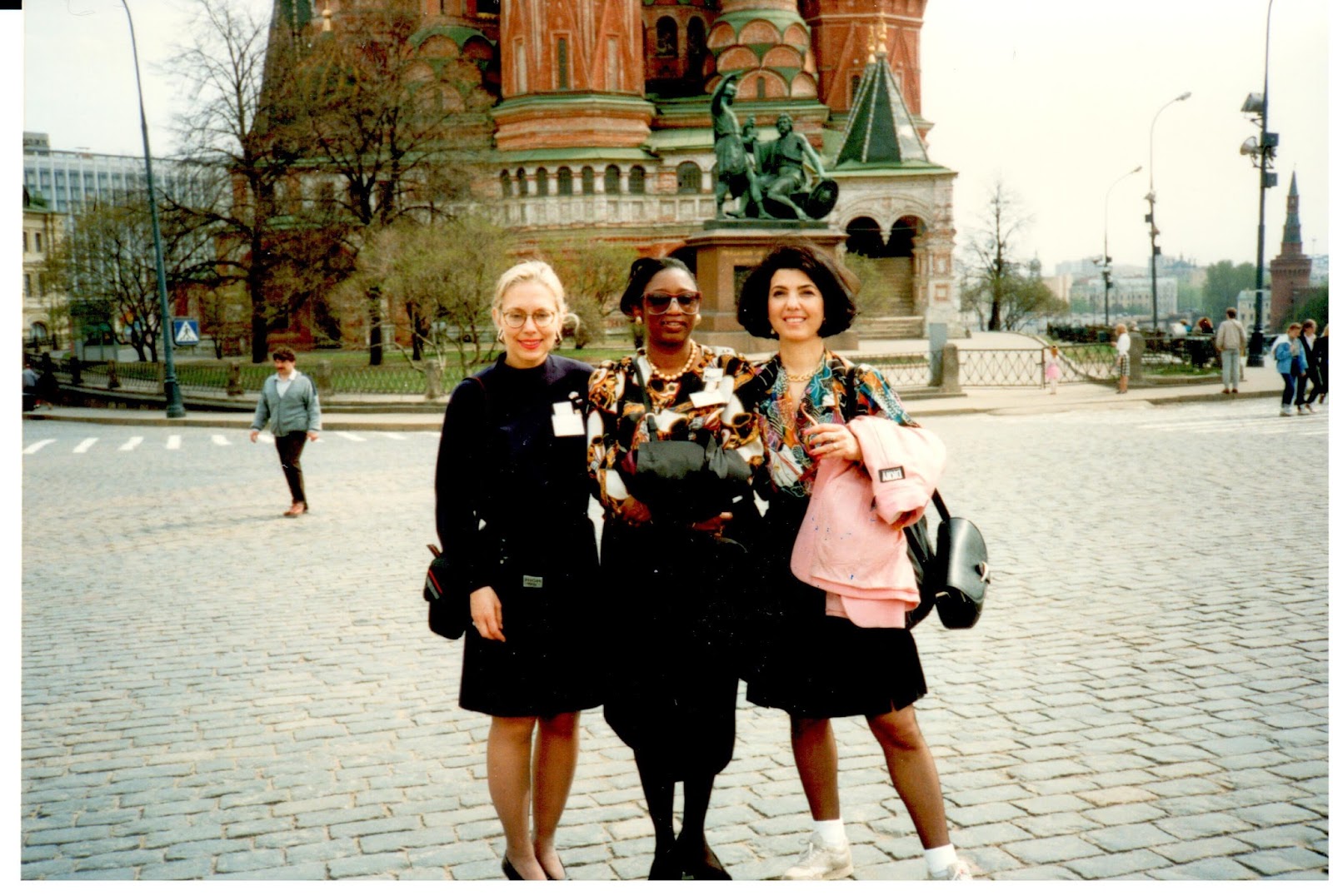
Oct. 1993-During the uprising: The Kremlin
and deserted Red Square behind me
In 1993 I ran my New York-based marketing consulting firm whose clients were Fortune 500 companies. I was also a volunteer counselor for the Small Business Administration for women's programs, when I was asked by the U.S. Information Agency to travel to Russia shortly after the fall of communism to teach women entrepreneurial skills.
On my second visit to Moscow, in October 1993, I was caught in the uprising of the Russian parliament against then-president Yeltsin. In the mayhem, I was chased by the militia and was threatened with jail ! 


THE FLIGHT FROM MOSCOW

​The night the American Embassy ensconced me safely in a hotel--before I caught the first flight out in the morning--I wrote a 23-page report to the USIA. Upon returning home, (pre-Internet) I mailed hard copies to all my concerned friends. A month later, at a lunch with a journalist friend, she said, “All it needs is hot sex and you have a novel.”

And thus, on November 3, at 2:48 PM, my writing career began. 


“HOTEL MOSCOW” – THE NOVEL

HarperCollins,
June 2015
That novel, celebrating the valiant Russian women I had met, was never published. However I had done extensive research, and years later, while on book tour for my third published novel,
JERUSALEM MAIDEN, I decided to use the material in a new novel I was penning.

Set in Moscow in 1993 during the uprising of the Russian parliament against Yeltsin, HOTEL MOSCOW is both the story of Russians struggling through transition after the fall of Communism and the personal journey of a visiting American woman who becomes embroiled in investigating a business crime in Moscow. She soon must come to terms with her parents' Jewish legacy in a country steep in anti-Semitism—and her own personal secret that might compromise her future.
          
Pre-publication, the novel has just received endorsements from the greatest suspense authors of our time!  
Here is what Nelson DeMille writes: "... HOTEL MOSCOW is a finely-drawn tale of a country emerging from its dark Soviet past into a present overshadowed by a new kind of terror and lawless corruption... that will keep the reader mesmerized.... A wonderful evocation of time and place and an insightful post-Cold War thriller which reminds us that in Russia the more that changes, the more that stays the same.” 

Tami Hoag writes: "Talia Carner sweeps us away along with her brave and determined heroine to an exotic and complex time and place, and keeps us riveted with the tension and dangers of international intrigue. A real page-turner!" 

(Read more accolades from best-selling authors, and/or read the first chapter.)

DON’T MISS WHAT’S COMING UP!
There is no greater pleasure for an author than to share her work with an appreciative audience. Many readers have enjoyed learning more about the background of each of my novels. For HOTEL MOSCOW, I have fascinating tales to share.

I will mail my newsletter monthly. I hope that you will subscribe (please write to MecoxHudson2@aol.com) and choose to take the journey with me.
  In the meantime, you may also: 

  • Pre-order HOTEL MOSCOW now at a great discount on AmazonB&N, or your indie bookstore. (My novels are published in paperback format to keep the price down.)
  • Suggest to your organization, local library or charity to invite me to speak at your events--or check my tour schedule and plan to attend any of my talks in your area, 
  • Forward this newsletter to others so they may subscribe directly.


Thank you, former readers and future friends. I am looking forward to hearing from you,

Thank you,

Talia Carner
www.TaliaCarner.com


Saturday, January 17, 2015

Give Me A Yellow Star

Yellow Jewish star, which all Jews were forced to wear by the Nazis and their allies.

In a departure from using my own words, I am posting a strong letter-to-the-editor written by an Israeli, voicing my outrage over the new wave of anti-Semitism sweeping Europe and which has long reached USA's academic world.

 DOWN WITH THE YELLOW STAR

By Eitan Chitayat (Edited by Dr. Chaim Bernard)
               
             Give me a yellow star. A dreary, cloth patch sewn in the shape of a Star of David that every Jew was forced to wear in Nazi Germany along with every country the Germans conquered; every country in Europe, some even allied with Germany ; every culture looking to expose the hated Jew.
            A yellow star worn by both my parents, while you, Europe, were standing by. That's what I am to you: The guilty Jew. The filthy Jew. The stealing Jew. The disgusting Jew. The less-than-human Jew. The Jew that can only do wrong – bomb innocent Muslim children - for that is, of course, all we do, all we ever aspired to as a nation, a race.
            The yellow star was forced on us. Rammed down our throats. It stood for dishonor and was associated with anti-Semitism as you probably know. It was to be a badge of shame like Hawthorne’s Scarlet letter. But 6 million times worse.
            Give me a yellow star. I want to wear a yellow star above my left breast where six million of my brothers and sisters were forced to don one. I want to walk around with a yellow star on every solitary piece of clothing I own. On my Armani suit, my Nike sweatshirt, Ralph Lauren sweater, my Champion hoodie, my Diesel jeans, my South Beach biker jacket. I’ll even wear it at the beach on my bare chest if I have to.
            I want to walk down the streets of Paris near Le Marais and be seen by you European anti-Semites. Outside the Great Synagogue of Stockholm, the Torah Center in Brussels, the Anna Frank Memorial in Amsterdam, the Holocaust Museum in Berlin, outside the Sigmund Freud House in London.
            I want all of you to see me with it and hear you say, ‘Hey, here comes the Jew’, he’s not just like the rest of us .
He’s just a dirty Jew.
A mass murderer.
He kills Muslim children and then uses their blood for matzah, just like the rest of the Jews.
They carpet bomb innocent people.
They are useless except for their knowledge, their Nobel prizes, and their success.
They kill children, those Jews.
Don’t you know? It’s the Jews who own Hollywood, the media, the banks.
They’re the scum of the earth.
They steal.
Hitler was right.
Let’s go spray-paint swastikas on his grandparents’ graves.
Let’s go beat him up.
Let’s kill him.
Let’s murder a rabbi in Miami or Brussels.

That'll teach them--to exist.

            I want that yellow star. Europe, to me that yellow star is a symbol of almost everything I stand for. It’s a symbol of surviving evil. It’s heritage and knowledge. Tolerance and optimism. It’s strength and confidence in the face of the weakness and insecurity of those not being taught well enough what their mothers should have taught them.
            That yellow star is education, resilience. It’s right over wrong, and it is life. It is testament to all who tragically died wearing it, so that their future surviving brothers and sisters know to never be afraid of who they are again. To never be silent again, not apologize for surviving. Thanks to them and indeed, for them, this yellow badge ceased being a badge of shame a long time ago. It's my badge of honor. I survived your indifference, your stupidity, your inhumaneness, your hatred, and your ignorance.
            For me, it’s a yellow F**k-You-Europe-Star.
            It’s a star that blinds out any other emblem that preaches hatred. It drowns out the form, shape and color of swastikas, the black flags of ISIS and Al Qaeda, and the green of Hamas or the yellow of Hezbollah.
            Before being herded off to the gas chambers around 70 years ago, Jews wearing their yellow star were hearing ‘Kill the Jews’, ‘Heil Hitler’, ‘The only good Jew is a dead Jew’, ‘Stealing Jew!’ – and all that before being ostracized from their communities, stripped of their belongings, property, identities, humanity and eventually, their lives.
            They were hearing words. It happened in many other countries too. Like my father’s country. A country he was expelled from for being a Jew. For being a dirty Jew. It. Always. Begins. With. Words. The same kind of words we’re hearing now here on your social media. On your streets. At demonstrations. In conversations. Words that have nothing to do with Israel. Palestine. Politics. The Middle East or anything.
            You might not be all too happy with ISIS and Hamas, but if you aren’t trying to expose them for who and what they are, then you’re not part of the solution but part of the problem. You know nothing about your own history, nothing about the Islamic conquest of Europe from the year 626 until this very day – the holy Jihad.
            The world’s abuzz right now with anti-Israel and anti-Semitic words. Anti-Semitic words that Jews like myself are used to. I’m talking to you, Dieudonné. Mel Gibson. Roger Waters. And the rest of you ignorant Jew-haters. And I’m talking to you, Radical Islamic leaders, standing behind your pulpits preaching lies and hate and division in the name of Allah. And to you – innocent bystanders in Europe.
            I’m talking to you, supposedly liberal minded people – friends of mine, even – who spend way too much time talking about Israel fighting for its existence in a defensive war, “disproportionally” ( as if the bombing of Dresden, the killing of Bin Laden, the invasion of Berlin by the Russian Army never happened) but very little talking about hundreds of thousands being murdered in Syria. In Iraq. About people being murdered for being followers of any other religion save Islam. Very little talking about ISIS taking over the middle east and putting heads on spikes, shooting people in ditches by the thousands, beheading a journalist on YouTube. Very little time talking about Syrians being gassed or a semi-literate peasant turned Turkish Prime minister spewing the kind of virulent anti-Semitism which ends with only one thing. And don’t forget 9/11, London’s 7/7, Spain’s Madrid train bombings or the Boston Marathon while you’re at it.
            Take a good hard look at my yellow star. Look at where it came from. Look what was done after we, the Jews, were forced to wear it and then ask yourselves, are we doing the same to others? Us Jews? Us Israelis? Are we Jews hellbent on exterminating people? Is that really what we want? Or are others doing that which you think we’re doing – others you refuse to be vocal about nor condemn with a simple post or click of your Like button.
            Here is what the German cleric Pastor Martin Niemöller wrote: “First they burned their books and their synagogues, and I didn't speak out. Then they came for the Jews, and I didn't speak out because I was not a Jew. Then they came for me, and there was no one left to speak out for me”. He wrote these lines in 1933 - too late – and he referred to the Nazis. But these words ring equally true in view of over 10% of the Muslim population in France, over 8% in Germany, over 6% in England, the neo-nazis in virtually every European country, or the Nazi Udo Voigt holding a seat in the Civil Rights Commission of the European Parliament.
            I, for one, Europe, am not going anywhere. Never again.Though some might wish it, NEVER AGAIN. For anyone else reading this from afar who might agree with what I’m saying, Jews and non-Jews alike, don’t feel sorry for me, my family, my friends. Don’t feel sorry for us. We’re fine and we’re not afraid, and we're here to stay. Don’t be afraid Europe, because I’m not intending to be a victim. None of us are. And I hope you aren’t either. My yellow star is staring extremism in the face.
           Am I cool with the yellow star? You’re damn right I am, totally.
--Eitan Chitayat

                                                               # # #

Please subscribe to novelist Talia Carner's blog, Talia Tells Tales 
Also check her website, www.TaliaCarner.com      


Sunday, November 16, 2014

My Brain's Big Bang


            I stare stunned as, on the blackboard, the professor writes a scientific formula that stretches into its third line of squiggles and numbers. He spews incomprehensible narration of what sounds like chemistry, physics of light, and astrophysics.
            Was this science course listed as non-prerequisite? I must complete a single science requirement this last semester for my M.A. in Economics. When I graduate in three months, I will leave my husband, take my two babies, and move to the city where the jobs are. Without a science course, I’ll lose my investment of four years and money I can ill-afford.
            At the blackboard, the professor explains how to measure the temperature of a mass of compact matter called “a star” based upon its thermonuclear fusion, and then shows how to extrapolate in the process how old this star is and how many eons will it live before its supernova nucleosynthesis. The kinematic viscosity is helpful here, and don’t forget the hydrostatic equilibrium, of course.… No science prerequisite? When I signed for Cosmology, I thought of Astronomy. I could already point out the Great Dipper and Orion, but would flaunt new expertise about constellations at a beach party on dark summer nights….
            At recess, I stop at the professor’s desk. He is munching on a sandwich.
            “Professor, this class was listed specifically as one with no science prerequisite.”
            “Do you have high school math?”
            I nod.
            “Well then, you have all the background you need.”
            I point at the blackboard. “Not this—”
            His hand waves in dismissal. “Cosmology is fun.” He gulps coffee from his thermos. “Trust me. You’ll be okay.”
            After everyone has written their names on the yellow legal pad, introductions are made. Of the over thirty students, I am the only one who is not a science teacher, a Brookhaven nuclear lab worker, or an engineer taking this “safe” course for a graduate management degree.
            Before next week’s class I verify that none of the university’s other science classes is listed with no prerequisite. They must all be worse than this Cosmology business. Besides, this class is scheduled in the evening, off campus, closer to my house. It’s difficult to pay for a babysitter and gasoline these days when my husband is MIA, yet suing for custody of my babies, and my legal fees have already depleted my parents’ savings.
            I can only switch classes in the first two weeks of the semester. It’s now or never. My entire future is on the line. Therefore, when in the second lecture the professor explains why Einstein’s Law of Relativity does not apply to cosmos, I plant myself in front of his desk at recess. I wait until he passes around the yellow legal pad for all to sign attendance.
            “Professor.” My eyes filled with tears. “I don’t know why Einstein’s Law of Relativity works on our Planet Earth. How can I figure out why it doesn’t elsewhere? This class is for scientists.”
            “High school math is all you need,” he repeats.
            “If I don’t drop out today, I won’t be able to get into another course.” I place in front of him the printout of the school program. “Can you suggest another one for a lay person?”
            “Look.” He picks something caught between two molars. “I believe that if you just sit in class and listen, you’ll get it.”
            I am certain that if I lay in the river for months I won’t turn into a crocodile. I shake my head. “No way.”
            “I’ll make a deal with you,” he says. “If you just show up for all classes, I’ll give you a B.”
            Just like that? “What about the quizzes and the semi-final and final exams?”
            “You’ll get a B. Just for attending.”
            Maybe it doesn’t look good for him when people drop out, but I am willing to buy the arrangement. Off the hook, I take a jaunty jig to my seat.      
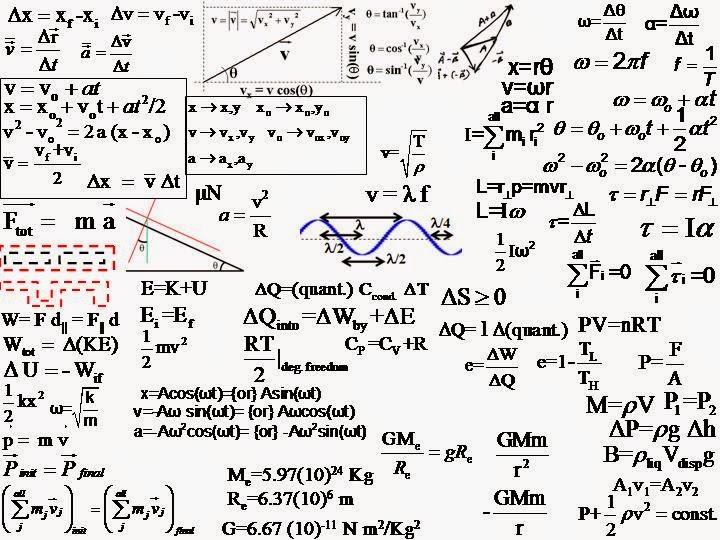
     For the rest of the semester, I ignore the two multi-choice quizzes in which I fail, followed by the mid-term. I also do not attempt to decipher the formulas the professor scribbles on the blackboard. I am light-years away from caring what happens to helium at 40,000 degrees Fahrenheit or calculating the velocity of matter gravitating toward a nebula (what’s that?) by converting the heat volume to light units. Or perhaps, the reverse deduction? Oh, yes, all these pieces of data also tell us how old the star is. Or is it a planet? Calculate it all, please, with your high school math. Did I mention distance? It can be extrapolated from this data if we also add the color of the light of a given star because it can be deduced from its electromagnetic spectrum….
            That is Cosmology. The science to top all sciences because it includes all of them.
            I show up every Wednesday at seven in the evening and sit down to doodle. The only thing I learn is that quantum mechanics and molecular physics are also incorporated into the formulas on the blackboard. It doesn’t matter, really. I will get a B. At recess, I sign my name on the yellow legal pad, then leave and go home to my babies and to study for the other classes I must complete. Actually, my home is no longer “my home,” as I have escaped domestic violence, and we now sheltered in someone’s basement. Soon, I’ll finish this semester and begin a new life far from here.
            Three weeks to finals. A judge with an unabashed dislike of women wishing to liberate themselves grants me only twenty-five dollars a week for the three of us. If not for the kindness of strangers, we’d starve. I polish my resume and start applying for jobs.
            I stop at the professor’s desk. “Remember our agreement?” I ask. “I don’t need to do well on the final. I get a B.”
            “Oh, no,” he replies. “The agreement was for you to sit in the classroom. You left every week at recess.”
            The hair roots stand on my head. A split second later, the blood drains from my temples. “You can’t do this,” I whisper. “I can’t graduate with less than a B.”
            “Sorry. That was the deal.”
            I begin to hyperventilate.
            His sympathy must be genuine because he says, “Look. If you get an A, I will ignore all these failed quizzes and the mid-term.”
            “An A?” I blurt like a dimwit.
            “I’m giving you a new deal.”
            I walk away in a daze. My celestial fantasies of a life outside the doomed marriage is sucked into the kind of black hole the professor talked about, some mass so compacted that nothing escapes from it, not even light.
           
            There is no choice. I must get an A in Cosmology as if my life depends on it, because it really does.
            I go to the public library and plant myself in the children’s section. I begin reading first-grade books about planets and novas and black holes. I study the colorful pictures of the expanding universe and read about stellar dynamics and galaxies and what they are made of. Junk, really, clouds of particles and gasses—hydrogen and helium mostly—that under high pressure change from one chemical composition into something else whose density can be measured using luminosity and temperature.
            Equipped to put it all in some context, I move to middle-school level books. I should be able to learn material suitable for a ten-year old, even a fourteen-year old. The Big Bang theory; the Hubble telescope; white and red dwarfs; isometric theory; gravitation; black spaces; nuclear fission. Artists’ renderings are very helpful. I begin to get it. Presented in a way I can understand, the material piques my curiosity. Suddenly, I even enjoy it. Coming out of the library late on a moonless night, I look at a pinprick of a star in the sky and know that I am staring at history: this light left its source eons ago, but only now it reaches my human eye here on earth. How awesome is that?
            I am soon in the library’s high school science section, then check another library to make sure I cover all available easy books. I have no idea what material was taught in class; to be on the safe side I read everything.
            By the end of an intensive three weeks, I close the last page of The Encyclopedia of Cosmology, having read every value in it. To my bewilderment and surprise, I comprehend it all.
           
            The transcript of my grades arrives. Scared, I hold the envelope in my palm. I’ve already moved my family. I glued stickers of galaxies and constellations on the ceiling of my babies’ new bedroom. My lawyer guaranteed the first two months’ rent, uncertain how I would pay it. I’ve taken the first semi-decent marketing job offered. The unknown, the responsibility, and the fear bear down on me so much that I’ve lost the grip on who I am.
            I open the envelope.
            Cosmology: A.
                       
            In the decades that have passed since my last exam, I’ve stared many times into the depth of the Milky Way. I know that our galaxy is merely one of hundreds of billions other galaxies, but rather than feel small, I feel victorious: I explored the farthest reaches of our vast, ever-expanding universe and came out a winner.
           
            # # #
            Author Talia Carner’s heart-wrenching suspense novels, JERUSALEM MAIDEN, CHINA DOLL and PUPPET CHILD (and her upcoming HOTEL MOSCOW) deal with social issues. Please check www.TaliaCarner.com


Tuesday, October 21, 2014

Tunneling Under Jerusalem


Talia in a 1900 kitchen yard (The Old Yeshuv Museum)

(Featured lead article, The Red Room, May 2011)
           
            Thomas Carlyle said, “What is knowledge but recorded experiences?” However, I could find no recorded experiences when I set out on the road to writing a novel inspired by my grandmother’s untapped artistic genius.
            I had a sense of the world she grew up in. She regaled me with stories from her childhood in Jerusalem in the early 1900s—her father’s roll-top desk that served as a bank and how she scraped the inside of a red candy wrapper in order to blush her cheeks. She taught me to sew pouches from old sheets and stuff them with beans and rice for our Shabbat cholent. Once she took me on a long bus trip from Tel Aviv to Jerusalem and we walked in the yard of her English-language all-girls’ school. “Elegant” she called the place that at her time had been attended by only three hundred privileged girls. But these experiences were the outside scaffolding holding up the soul of a woman who, I was certain, had been born in the wrong time and place. What was the inner life of my feisty young protagonist trapped in a religious society and compelled to follow a predetermined path?
            Although my core family was secular, my Tel-Aviv neighborhood was mixed: I played hopscotch with Orthodox girls, and on Shabbat was careful to keep my music down. Throughout my twelve years in secular schools I studied Bible, in which I excelled, in addition to some Talmud. Our Hebrew literature was often steeped with religious overtones.
            Yet, digging into the nuances of the more extreme faction of an Orthodox Jewish woman’s life one hundred years ago in Jerusalem, I hit a wall. Historians, all male, never covered women’s concerns, while ultra-Orthodox Jewish women of that era rarely documented their own daily existence. They believed that suffering in Jerusalem—starvation, shortages, maggot-filled water cisterns, or fifty percent children’s mortality—wasn’t just a fact of life, but helped hasten the messiah’s arrival.
            There were short stories, articles, letters, and journals—and eventually some academic research—about Zionist women who, driven by ideology, immigrated to the Holy Land in the early part of the 20th century to seek equality with men in either the new agricultural communities (Kibbutzim) or whose voice was heard in politics. Israel’s late Prime Minister Golda Meir was the product of such Zionist venture and aspirations.
            But the ultra-Orthodox Jewish women in the Holy City remained invisible.
            At the end of the backward Ottoman rule, Jerusalem was a strategic city that attracted foreign embassies jostling for power by filling the void in governance. As they built hospitals and settled local disputes while their missionaries served hot meals and opened schools, the insular ultra-Orthodox community further closed itself off from their influence.
            A typical neighborhood in Jerusalem featured a large communal space lined by rows of identical one- and two-room houses that clung together, their back walls bordering the thoroughfare to form an impenetrable blockade. Life took place in the central common area, called “hatzer,” courtyard: the residents shared the oven, well, laundry shed, outhouses, yeshiva, mikveh, and synagogue. Even as overcrowding crisscrossed the open space with alleys, that’s where the women worked, cooked, gossiped, and watched over their young children. Ultra-Orthodox Jewish women were hidden not only behind the thick stone walls, but also underneath heavy clothing and hair coverings—and behind a fear of “others,” which included less observant Jews. Adherence to a strict modesty precluded speaking to men, beyond the absolute necessary exchanges with merchants who ventured into their courtyard. Furthermore, the women were sheltered by rules, Commandments, dictates, norms and social expectations—as well as by ignorance: while one-hundred per cent of boys studied from dawn to dusk, starting at age three and well into adulthood, most girls were not schooled at all.
            One late fall day I checked into a Jerusalem hotel on the same ancient road leading to Bethlehem that my protagonist took when traveling to visit Rachel’s Tomb. Like a detective returning to the scene of a crime for more clues, I explored anew the city I had known and adored, but whose secrets I sought to expose.
            When I had lived there as a student at The Hebrew University, my fingers had turned blue in the freezing winters in centuries-old rented rooms. On warm summer nights, I had walked in the Old City (it was safe then) to the Arab bakery for pre-dawn freshly baked pitas. I attended a male cousin’s ultra-Orthodox second wedding to a mature woman he had never met, arranged by the rabbi and witnessed by five hundred disciples. I had strolled with a boyfriend on the ramparts of David Citadel, and on blistering hot days, had waded in the cool water of Hezekiah’s Tunnel, hugged by its tight walls and its biblical history.
            Yet, none of this had opened a window into the mystery of ultra-Orthodox Jewish women’s lives in the obscure past. I needed to dig a tunnel into history.
            Yad Ben-Zvi library held several preserved hand-written, personal journals. I also discovered barely legible fourth or fifth copies Ph.D. dissertations typed on manual typewriters decades ago. I spoke with historians, recorded oral histories of old female relatives, and walked the streets of Jerusalem aided by a 1912 map that showed most of the buildings—sometimes whole neighborhoods—unchanged.
            My mind’s eye stripped the streets and buildings of all modern accoutrements, for in the Ottoman era even the thoroughfares remained unpaved as in biblical times. Running water, electricity, and sanitation were only added gradually by the British after taking over the mandate of the Holy Land in 1917. The first car arrived in Jerusalem a decade earlier, during the time my story was set—but the rabbis forbade looking at this abomination. With no news broadcast, no music, and no vehicular traffic, streets and markets sounds were much different. But what was the cadence of life that early-1900s Jerusalem women heard? What were the smells?
            The breakthrough in my research came in The Old Yishuv Court Museum in the Old City of Jerusalem. With donations of old tools, utensils, beddings, furniture, books and mementos, the founder had turned her parents’ old home into a museum that showed life in Jerusalem in the olden days. Here I was able spend time in a replica of the cramped kitchen in which my protagonist and her mother had toiled and, holding the washboard in the adjacent handkerchief-size yard, I bent over a knee-high tub and imagined scrubbing clothes with recycled water.
            I stared at the one tight bedroom with its high vaulted ceiling, where a lace curtain separated the parents’ sleeping nook. The stack of mattresses, I knew, would be spread on the floor at night. I just hadn’t realized how small the mattresses were and how few of them could actually fit in such a tiny space. In the center of the next bedroom, which didn’t exist in the average dwelling of the time, stood a four-poster maternity bed. It moved from home to home when women gave birth, which was often. Unfortunately, I had learned, almost half the birthing mothers eventually died. My own grandmother’s mother had borne fourteen children, eight of whom survived to adulthood—a rare achievement.
            I studied the jobs women kept in order to support their husbands’ studies while bearing and raising all their children—in printing, millinery, bookbinding. Women, the guardians of home, served both as the carriers of the future of Jewish people as well as the prisoners of this aspiration. 
            A friend arranged for a thirty-minute interview with Rivka Weingarten, the founder of the museum, who was old and sickly. We talked for over two hours. She knew my family that lived in Jerusalem for ten-generations and after whose members some streets were named. She described a scene I later used in my novel, in which my protagonist Esther ironed clothes with a heavy press iron, heated by sizzling embers inside. Her sister’s blew through a straw into a hole on the side of the pressing iron, thus raising the heat….
            Emerging outside into the bright Jerusalem sun reflecting back from the cream-colored chiseled stones, I followed my protagonist, a budding artist with passion for painting. Since visual expression was forbidden by the Second Commandment “Thou shall not make any graven images,” where would she quench her thirst for art? It dawned on me that I, a secular Jewish woman, had never set foot in a Jerusalem church. There had been occasions when my job required me to accompany a group of tourists to the Church of the Holy Sepulchre. I always I hung back just inside the doorway, queasy with a vague sense of my betrayal. How much weightier would my protagonist’s apprehension be? How sinful would she feel, with God crouching in her head and registering everything her eyes saw?
            For the first time in all my years and frequent visits to this holy city, I entered my protagonist’s shoes and, moving inside a bubble of foreboding sense of transgression, I set to explore the city’s churches and their magnificent art.
            After that, when I examined photographs of women shelling broad beans or standing in line at the single street faucet for the scarce water distribution the Turks failed to maintain, I did so with the tension derived from my protagonist’s wish to break away from a life of unceasing labor, squalor, and worries, to let her soul soar as high as the angels floating in a church’s mural. As I peeked in Me’ah She’arim into the still-standing vaulted ceiling, crowded rooms where whole families of ultra-Orthodox Jews still lived in poverty, subsisting on women’s small enterprises and charity while the fathers studied all their days, I knew that—except for the running water and toilet facilities in the yard—I was looking at history.
            Once, on a blistering summer day, waiting at the intersection by Me’ah She’arim for the traffic light to change, I glanced at a fully covered woman standing next to me. She was very young—and pregnant. In the stroller and hanging onto her long, ample skirt were four more children. Although under Israeli law she probably married at seventeen rather than at thirteen, I wondered how much freedom she had had as a teenager to assess her world and her future. Had she dreamed of living in Paris instead?
            My protagonist, Esther, did, and she was determined to follow her heart. And she did. I had no choice but to follow her to Paris….
# # # 

Talia Carner’s novel, JERUSALEM MAIDEN, was published by HarperCollins (2011)
www.TaliaCarner.com


Tuesday, September 23, 2014

Public Thoughts To be Read At The Rosh Hashanah Table

Rosh Hashanah 2014— Year 5775 of proud Jewish history  

By Talia Carner
            The New Year has always been a time of reflection about life within the broader context of one's relationship with others and one’s relationship with God. For atheists, the latter is an examination the moral values by which each of us lives. This is the time of spiritual reconnection with Jewish traditions and of remembering those who, over generations of persecution, were killed for the single sin of their faith.
            The tradition of eating sweet foods carries with it the optimism of a sweet new year. It is a new beginning, a sweet chance to start over.
            All across the globe, Jews share these moments—and the hope carried in them. This sharing of rituals ties us all together and remind us that no Jew is ever alone.
            Yet, as a community, we are often alone. Friends of the Jews come and go, their loyalty never taken for granted. This year, Rosh Hashanah falls in the midst of rise of anti-Semitism sweeping the through Europe, Africa and Asia, and has landed right in our midst at the Manhattan's UN building. The centrality of Jewish identity—the Jews’ right for self-definition and sovereignty in their own land—has been challenged not only by ignoramus, but by intellectuals in leading universities, mainstream media and civic organizations claiming to be unbiased and inclusive.
            Rosh Hashanah now stands to remind us that hate can come knocking on our door first with words, followed by denying our identity, then erasing the lessons of our history, and continues with biased resolutions and economic boycotts. Before long, it is with , and guns, bombs, and showers of thousands of rockets that no empty promises of “never again” are able to stop.         
            Let the fresh start of Rosh Hashanah therefore remind us how much pride we take in Jewish extraordinary achievements in science and medicine, unsurprisingly reflected in Israel’s miraculous contributions to technology, agriculture and science.

            Israel makes us walk tall. Without her, Jews would have been like the Gypsies and Kurds of the world. Yet, she is now in mortal danger of a war orchestrated by enemies delighted to sacrifice the lives of millions of their people to see the Jews disappear from the Middle East.
            As we move into the New Year, let us bless all the good things the world has given us while we send our prayers for those who have already been taking the first bullet for us--and this year, 67 beautiful souls of Israeli soldiers did just that. Their friends will continue to do so to preserve a home for all Jews persecuted in their countries. And as we do so, let us search within ourselves whether we have done all we could for Israel and its people who need us now more than ever.
            Several years ago, then-Israel’s president Shimon Peres said that even Ben-Gurion had not dreamed big enough. Let us dream big tonight—stretch our dreams to encompass all the vast possibilities of hope, and let us dream tonight of a world of peace.
            Let’s bless all the good things God has given us so far, and celebrate our resilience and our heritage of strong Jewish values that we have shared with the world over for centuries. And let's allow that dream bring joy to our hearts and to our Rosh Hashanah table.
            Amen.
           
Author, speaker and activist Talia Carner lives in New York. Her next novel, Hotel Moscow (HarperCollins, summer 2015) deals with anti-Semitism and Jewish identity.   www.TaliaCarner.com.