Showing posts with label home. Show all posts

Monday, May 27, 2013

Swans And Butterflies


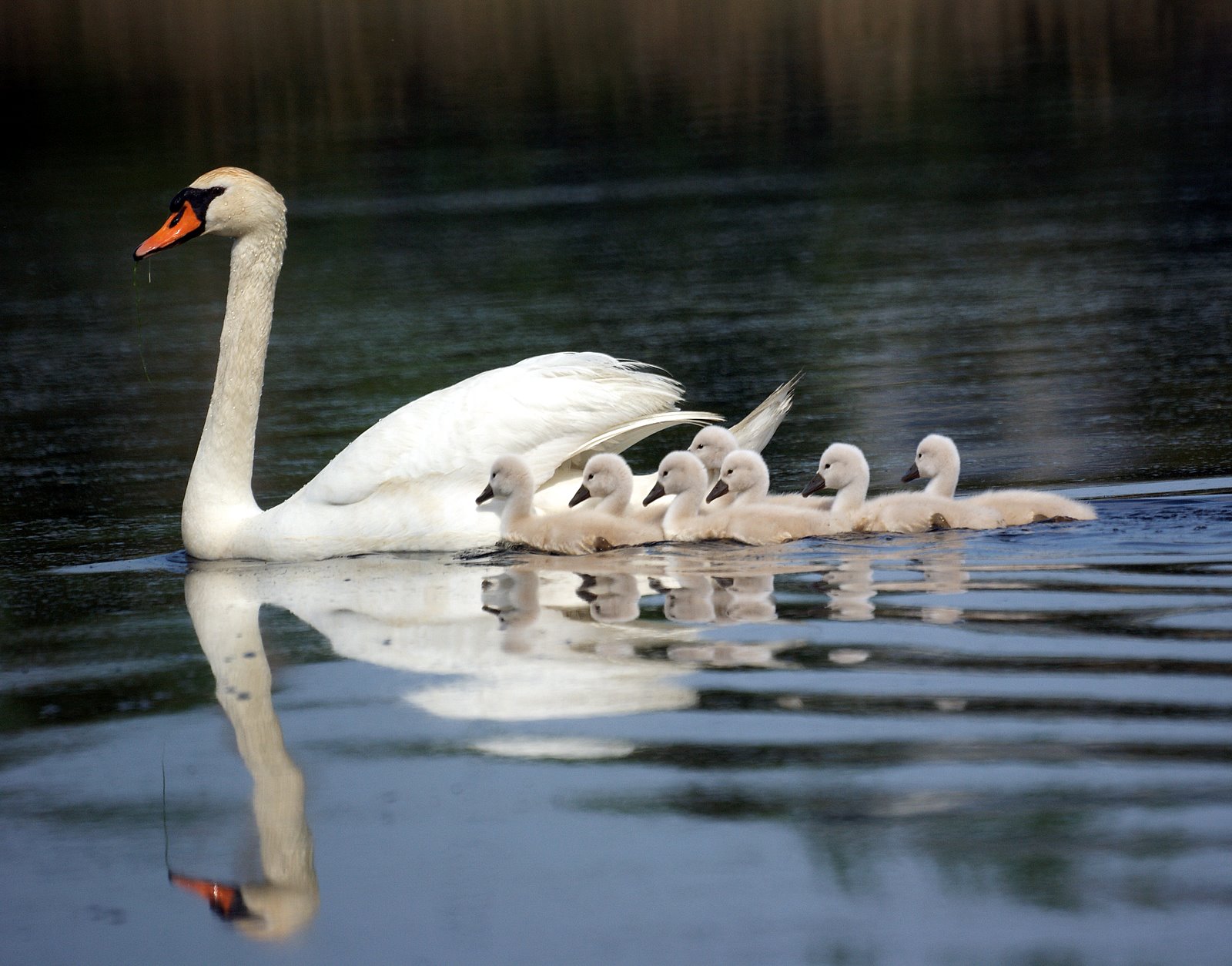
             It is a late summer day. Outside my window, the wetland is dotted with blooming pink flowers as large as saucers and lush shrubs and low-growing trees that have adapted to the brackish water. Six-hundred feet away, under cloudless blue skies, the waters of Mecox Bay sparkle in azure. Three dozen swans glide over the mirror-like surface, carving gentle wakes. Half-way between the house and the bay, a fawn shows up on a deer path cut into the phragmites. It stands still, brown eyes filled with wonder, the white spots on its back like a sprinkle of freckles across a child’s nose. The fawn’s gaze follows two large Monarch butterflies flying over its head, their large orange-colored wings flapping in a balletic circle.

            This could be a scene from the Disney-animated movie Bambi, but it is real, and it is mine. I catch the sight through almost every window of my otherwise modest house.

            Our life changed when, in 1995 our four young-adult children ganged up on us and staged a coup d’état. They had called one another from their respective colleges and universities to gather in our Fire Island home, where we had been spending summer weekends for seventeen years.

            “Enough of Fire Island. Get a place in the Hamptons,” they announced.

            “The Hamptons?” My husband, Ron, vaulted over his ongoing tirade about getting dressed up Saturday night to wait for an hour at one of the Hamptons’ notoriously crowded and expensive restaurants—only to be denied a decent meal. “No way.”

            “But you love it here,” I reminded the children. They grew here, each held his or her first job here, sometimes returning to it the following summer. Each became a part of the fabric of life in Fire Island. We all enjoyed the ferry ride with groceries across the bay, the insulation from the world in the quiet, shaded lanes that only saw the wheels of wagons and bicycles.

            But after the coup d’état weekend ended, the warmth of our hours of laughter, shared cooking, and games lingered. I sat Ron down for a talk. “Look how the children make the effort to be together. It’s a gift that all four enjoy each other’s company. Let’s spend their inheritance now—on them.”

            He looked past the sparse row of summer cottages toward the stretch of white sand lining the ocean. “Only if we can stay close to the ocean.” 

            Summer weekends on Fire Island had been an oasis from my high-powered corporate career during an era when women broke the glass ceiling—and cracking our skulls in the process. However, I had just left that world to write fiction full time. I could settle anywhere. Yes, a view of the ocean would be lovely for my new occupation, I agreed, but since we had witnessed in Fire Island enough storms and houses tumbling into the water, we should buy not right on the ocean, but across the street from it.

            Finding such a place in the Hamptons turned out to be a daunting task. A home in walking distance to the beach? Brokers showed us houses a mile away. We distilled our request: “Barefoot walk to the beach.”

            But a home across the street from the ocean required an easement through ocean-front properties, all private, thus further narrowing our options. “How about near a public beach?” we asked.

            Driving around to look at available homes, I eyed Mecox Bay and became greedy. I  wanted water in the back, too.

            With this added requirement, the offerings of both front and back water views were almost nil, and the few houses we saw were suburban homes. We wanted a beach house; our sprawling residence in Nassau County with its professional landscape required maintenance. We envisioned raw dunes dotted with beach grass, reeds and wild roses—not another manicured lawn. We only wanted to upgrade the house our Fire Island’s beachy feeling, whose kitchen cabinets had been made of lumber the contractor had slapped together.

            Instead of a house, we found a land on Dune Road in Bridgehampton with a handkerchief-size footprint permitted to build on the wetland. Yet merely “a barefoot walk” from Cameron public beach, it faced the ocean from a safe distance in the front while hugging the bay in the back. Most enticing, the two bodies of water met right past us, creating yet another water front and giving the house-to-be stunning 330-degree water views.

            Building it took only a season. The first night we slept there, with the windows opened,  we listened to the concert produced by fowls and insects in the marshes. A surround sound symphony of cracks, tweets, buzzes, squeals and pitched cries filled the night, competing with the syncopated roar of breaking ocean waves. The music magnified and traveled over the still waters of Mecox Bay. Our bedroom felt like a boat moored in the middle of nature, unencumbered by human noise, amidst nothing but land, and sea, and undisturbed fauna and flora.

            What we had never considered when first giving in to our children’s request was that this weekend abode would soon become our main residence.

            It started two days after we had settled in. One morning, a couple knocked on our door and presented us with a pie! They introduced themselves as “neighbors” although they lived a mile away around the bend. By noon, the neighbors across the street invited us for lunch at their house. The following week, another couple down the street hosted a dinner in our honor and introduced us to their local friends. Another neighbor threw a lavish party and invited everyone on the street to celebrate summer.

            In our many years on Fire Island, our social life consisted entirely of our friends from the mainland taking the ferry over. Unlike some families that moved in full-time in summer and whose young children attended camp there, Ron and I worked at our respective jobs all week while our children—often the conduit to parents’ socializing with other parents—were at day camps on the mainland and later at sleep-away camps. In seventeen years, we’d never made new local friends.

            Yet here, in the first Hamptons summer, our circle of acquaintances and new friends expanded fast. After a lecture at Guild Hall, a woman turned to me and asked what I thought about the topic. As we walked up the aisle with our husbands in tow, we all decided to go out for coffee…. When I stumbled over a store’s threshold into the arms of a mother-daughter duo, they invited Ron and me for a party at their home. During the Film Festival, while buying an extra pair of tickets from a couple, we were literally “picked up,” when they asked us to join them for dinner.

            In subsequent years, at a phase when grown children drift away, our beach house became their weekend gathering place, keeping them in our life. We biked and kayaked and swam as a group. We cooked together one main meal each day, freeing us to make social plans for another meal—except that our children often chose one another. One by one, they married, yet their friendships deepened to include new spouses.

            A few times a year, a huge bulldozer dredges up sand to create a wide tunnel that drains the overflow of Mecox Bay into the ocean. Within days, natural pools are formed, warmed by the sun. After babies began to arrive in our family—and all too soon turned into toddlers and beyond—they loved to pull a wagon to “the cut,” splash in the shallow water, build sand castles, or catch crabs with a net at the end of a pole. Often, playmates’ parents now park their cars in our driveway to take advantage of our proximity to this children’s haven. Yet again, our beach house has extended our years with our family, keeping a second generation offspring close.

            As an antidote to the hectic weekends come the quieter midweek days. We had long sold our Nassau County home and bought an apartment in the city for winter. Now we move in to the beach from spring to fall, I with my computer, Ron with his golf clubs. I’ve signed up at two local gyms, procured a library card, joined a Mah-Jongg game, and opened an account at the Sag Harbor pharmacy. We now dance to the drummers at Sagg-Main beach and attend services at the Jewish center.

            As I watch the dawn activity on the sand bar in “the cut,” where flocks of birds of dozens of species vie for a footing and nesting, I observe a few SUVs pulling onto the beach, their drivers seeking what I am fortunate to wake up to. I take my coffee thermos, don a life vest, and hoist my kayak into Mecox Bay. As I paddle into the midst of nature, the pink in the east changes to gold, the crisp air welcomes me, as do the swans.

Good morning, Home.

# # #


Thursday, March 28, 2013

Paris, here I come!


             In my four years at Alliance Française, a French-language high school in Tel-Aviv, we all became Francophiles. We belted out French songs, staged school plays in French—and cursed in French. A romantic teenager with three language at my disposal and a flare for writing, I penned poetry in French.
            The summer after our junior year, a selected group of students was sent to France on a month-long mission, which included almost three weeks in Paris. That memorable first trip turned up decades later as the seed of inspiration for my novel JERUSALEM MAIDEN.
            Somewhere along the journey into French language and culture, a dream sprouted: one day I would spend a semester at the famous Sorbonne university in Paris, where I would study Civilisation Française.
            Life, though, had its own agenda, and the dream never materialized. And while in the decades that followed I visited Paris numerous times, I put behind not only that youthful fantasy, but also the language I had once loved. In my twenties, I moved to New York, made English my daily language—and soon the language of my career, first in business, and then in the literary world. When my American husband and I traveled through France, I acted in restaurants and stores as an American tourist that did not even speak French. The Francophile part of my life was erased.
            And then, in 2005, while penning a novel set in Jerusalem, my protagonist surprised me and took off to Paris. Only after I packed my bags and chased her there did I realize that unbeknown to me, the author, her move had been motivated by my very first school trip in the 1960s. It was then that I had imagined my grandmother—the inspiration for JERUSALEM MAIDEN—as an artist there during the avant-garde era.
            What did I know about Paris at that historical time? In the two weeks prior to leaving home to follow my protagonist, I trained my oral muscles and grey cells with verb conjugations and nuanced pronunciation. My husband was amused when I walked around the house mouthing forgotten words and phrases. 
            In Paris, for the first time in decades, I spoke the language as I became a flaneuse, a wanderer, now exploring the city though the eyes of my protagonist in 1924, at a time when most houses had no running water, few had electricity or gas lines, and sanitation services were provided by the slop wagon into which residents emptied their chamber pots. I sat at dusty libraries and leafed through tomes of history—in French.
            In 2010, when JERUSALEM MAIDEN was preparing for publication by HarperCollins, I set out on another project, investigating the history of a painting that had been in my family. I grew up with this museum-size canvas and was so attached to it that after my sister inherited it I commissioned an artist to copy it. Now I contacted long lost cousins, a brother and a sister whom I had met only once forty years earlier, and whose grandparents had originally purchased this painting. Raised in Germany, the brother and sister—now with their respective spouses—lived in different parts of France. The first phone conversation with the sister turned into an almost two-hours long chat. A week later I spoke with her brother, and after forty delightful minutes, he put his French-speaking wife on the phone. Like the others, she was warm and delighted at the renewed contact.
            Three months later, my husband and I piggy-backed a trip to Europe with a get-together in Paris with these cousins. The three couples spent fabulous four days, where we bonded beautifully. Since both my cousins’ spouses spoke no English, I chatted in French from morning to night. My husband, who spoke only English showed the best of his bonhomie self. Although my grammar was far from perfect, it was clear that it was intuitively ingrained, as only someone who had once been fluent in the language could have mastered.
            A year ago, in the spring of 2012, Ron and I visited each of the cousins in their respective hometown, where again I spoke only French. Soon, I was flooded with memories of my high school years when the language and its cultural nuances had meant so much to me.
            This past Fall, at a conversation with a young man who was on remission from cancer, he brought up the question of a bucket list. “What would you do if you had only one year to live?” he asked.
            After some thought, I replied, “I’ll eat chocolate.”
            He burst out laughing. “That’s it? You’ve done and seen everything? I haven’t even been to California!”
            Later, I reflected on my pathetically short wish list. Had I really accomplished everything I could ever dream of? Or did I not dare dream outside the obvious, beyond what was available to me?
            My old desire to spend a semester in the Sorbonne popped in my head. At this time in my life, nothing held me back from making it happen: I had the financial means, my children were emancipated adults, my husband a busy independent man. Besides being French-challenged, he had always enjoyed Paris for just a few days at a time. On the other hand, he always supported my interests. With his unending encouragement, I had blossomed.
The first problem I encountered was that the student body at the Sorbonne that had once been so appealing, hadn't changed: they were still twenty year olds. And a semester was too long to tear myself from my life.  
I approached my husband with the request of a birthday gift of only one month in which I would tailor my own language and culture program. Sure enough, a quick Google search brought up language immersion classes for business executives, presumably in their 40s rather than in their 20s. I discovered groups of expat writers that conducted French conversations, and I signed up for lectures about art and theater along with architectural walks. I would take my exercise and dance classes in French and would even play Mah-Jongg in French.
There was a moment—turned into hours--in which I panicked.
In today’s world of Internet, I could view photographs of each furnished apartment from every possible angel. It would be my home for the month, a place to cocoon alone. But that’s when reality hit me. I had never been alone! Even in the solitude of writing, Ron had always been in the background. After thirty-five years together, I was accustomed to his ever-present care and friendship. Since he struggled with the same separation anxiety, I had to keep my bravado. I forged on with my plan--or my bucket list would once again be reduced to only one thing: chocolate….

I will be leaving for Paris in 8 days. Stay tuned.

 # # #
Novelist Talia Carner lives in New York. Her latest novel, JERUSALEM MAIDEN (HarperCollins, 2011) deals with the struggle between freedom and faith. (www.TaliaCarner.com)